Church of the Holy Trinity

What is Anglican Christianity?
Anglicanism is a historic expression of the Christian faith rooted in the life of the early Church, shaped by the Scriptures, the ancient Creeds, the apostolic ministry, and the historic liturgy of the Western Church. It is both Catholic and Reformed: Catholic in preserving the faith, worship, and sacramental life handed down from the early Church, and Reformed in seeking to reform abuses according to the authority of Holy Scripture.
Unlike many Protestant traditions, Anglicanism does not view itself as a new church founded in the sixteenth century. Rather, it understands itself to be the continuation of the ancient Church in England, reformed according to biblical principles of original Christianity and in maintaining continuity from Christ's Apostlic Church.
The Origins of Anglican Christianity: The Early Christian Church
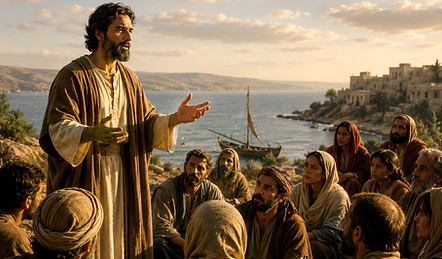
To understand Anglicanism, one must begin with the Church established when Jesus Christ commissioned His apostles to "Go therefore and make disciples of all nations..." (Matthew 28:19–20)
The apostles spread Christianity throughout the Roman Empire. By the end of the first century, bishops (episkopoi), priests (presbyters), and deacons served churches across the Mediterranean.
The early Church shared several defining characteristics:
-
Authority of Holy Scripture
-
Apostolic succession of bishops
-
Celebration of Baptism and Holy Communion
-
Weekly liturgical worship
-
Recitation of fixed prayers
-
Acceptance of the Apostles' and Nicene Creeds
These elements remain foundational to Anglican worship today.
Early Christian Worship
From its earliest centuries, Christian worship followed a recognizable liturgical pattern.
Justin Martyr described Sunday worship around A.D. 155:
-
Scripture readings
-
Sermon
-
Prayers of the people
-
Kiss of peace
-
Bread and wine offered
-
Eucharistic Prayer
-
Holy Communion
This basic order remains recognizable in today's Anglican Eucharist.
Likewise, Christians prayed at fixed hours each day, a tradition inherited from Jewish worship.
This eventually developed into: Morning Prayer, Midday Prayer, Evening Prayer, and Compline before bedtime.
The Anglican Daily Office continues this ancient rhythm.
Christianity Comes to Britain
Christianity reached Britain remarkably early. By the second century there were organized Christian communities in Roman Britain before the Angles and Saxon tribes arrived.
By A.D. 314, British bishops attended the Council of Arles in France, demonstrating that the Church in Britain was already fully integrated into the wider Universal "catholic" Church led by several chief bishops (popes and patriarchs).
Other evidence includes British bishops being present at the Council of Rimini (359), Christian churches built in the third and fourth centuries have been discovered archaeologically, and writings by St. Gildas describing Christianity before the Anglo-Saxon invasions.
Thus Christianity existed in Britain more than two centuries before Augustine of Canterbury was sent by Rome to Britain to establish a Church under Rome.
Celtic Christianity
After the Romans withdrew from Britain in A.D. 410, Christianity continued to flourish among the Celtic Britains Bishops and the Ireland, and Scotland.
The most famous missionary was St. Patrick, who evangelized Ireland during the fifth century.Irish monasteries became centers of Biblical learning, missionary work, scholarship, prayer, and preservation of classical learning
Other great Celtic saints included:
-
St. Columba
-
St. Aidan
-
St. Brigid
-
St. Cuthbert
Celtic Christianity emphasized:
-
Deep devotion to Scripture
-
Frequent prayer
-
Monastic discipline
-
Missionary evangelism
-
Love of God's creation
-
Ascetic holiness
Many distinctive customs existed, such as:
-
Different calculation of Easter
-
Celtic tonsure
-
Stronger monastic leadership
These were disciplinary differences rather than differences in doctrine. The Celtic Church shared the same faith expressed in the Apostles' Creed and Nicene Creed.
Augustine of Canterbury
In A.D. 597 Pope Gregory the Great sent Augustine to evangelize the Anglo-Saxons in southern England. Contrary to popular belief, Augustine did not bring Christianity to England. Instead, he brought Christianity to the pagan Anglo-Saxons while encountering an already existing British (Celtic) Church.
His mission eventually united much of England under one ecclesiastical structure while preserving much of the earlier Christian heritage.
The Medieval English Church
After the coming of Augustine of Canterbury, the Church in England remained part of the Western Catholic Church whose Patriarch was the Pope of Rome During this period it produced remarkable Christian leaders:
-
St. Bede
-
St. Anselm
-
St. Dunstan
-
St. Thomas Becket
English Christianity developed distinctive customs:
-
Sarum liturgy
-
English monasticism
-
Cathedral schools
-
Parish churches throughout the kingdom
The Church was fully Catholic while developing its own English identity. This is very like the different various Eastern Orthodox Churches.
The English Reformation
By the sixteenth century, calls for reform had spread throughout Europe. Many believed the Western Church under the Pope of Rome required reform in areas such as clerical abuses, indulgences, Papal authority, greater access to Scripture, and worship in the language of the people.
The English Reformation sought to reform the Church while preserving continuity with the historic Church from Jesus Christ and his Apostles.
Henry VIII Did Not Establish the Anglican Church
One of the most common historical misconceptions is that King Henry VIII founded the Anglican Church.
He did not. Instead:
-
Christianity had existed in Britain since at least the second century.
-
English bishops had participated in Church councils centuries before Henry was born.
-
The Church of England had existed for over a thousand years before the Reformation.
-
Henry inherited an already established English Church.
What Henry VIII did was sever the jurisdictional authority of the Bishop of Rome over the Church in England.
The Act of Supremacy (1534) declared the English monarch to be the Supreme Head (later "Supreme Governor") of the Church of England in place of the pope for matters of governance within England.
Henry retained many original Catholic doctrines and practices during his reign. The more distinctly Protestant reforms developed chiefly under Archbishop Thomas Cranmer during the reigns of Edward VI and Elizabeth I.
Thus, Henry VIII did not create a new church. He changed the governance of an ancient Church that had existed in England for many centuries, which arose before being under the authority of the Pope in Rome. This distinction is central to Anglican self-understanding.
Thomas Cranmer and Anglican Identity
Archbishop Thomas Cranmer became the principal architect of Anglican worship. His greatest achievement was the Book of Common Prayer (1549, revised in 1552 and 1662). The Prayer Book was based off of Christian Monastic practice. As such it placed Scripture at the center of worship; translated services into English, the common language of the people much like the eastern Churches not under the authority of the Pope; retained historic sacramental worship; and provided a unified form of prayer for the Church.
The Prayer Book has shaped Anglican spirituality for nearly five centuries and remains one of the defining documents of Anglicanism.
Anglican Christian Beliefs
Classical Anglicanism is founded upon:
-
Holy Scripture as the supreme authority in matters of faith and salvation.
-
The Apostles', Nicene, and Athanasian Creeds as faithful summaries of biblical doctrine.
-
The two dominical sacraments instituted by Christ: Baptism and Holy Communion, while recognizing other sacramental rites of the Church.
-
The historic episcopate, maintaining bishops in apostolic succession.
-
The Book of Common Prayer as the principal guide to worship.
-
The Thirty-Nine Articles of Religion, understood as historic doctrinal standards expressing the Church of England's Reformation convictions.
Anglican Christian Worship Today
Traditional Anglican worship continues the pattern of the ancient Church. Its principal services include:
-
Holy Communion (Eucharist)
-
Morning Prayer
-
Evening Prayer
The liturgy features:
-
Scripture read extensively
-
Psalms sung or recited
-
Creeds confessed
-
Historic prayers
-
Weekly Eucharist
-
Liturgical seasons
This continuity links present-day Anglicans
with over two thousand years of Christian worship.
Anglicanism Today
Today, Anglicanism is a worldwide family of churches serving tens of millions of Christians across every continent. While different Anglican provinces vary in theology and practice, classical Anglicanism continues to describe itself as the ancient Catholic Church in England, reformed according to the Word of God. Churches such as the Reformed Episcopal Church (REC) and many provinces within the Global Anglican Future Conference (GAFCON) and the Anglican Church in North America (ACNA) emphasize this understanding by affirming both the catholic heritage of the early Church and the biblical reforms of the English Reformation.
Conclusion
Anglicanism is not a religion invented by Henry VIII, nor is it merely a middle way between Roman Catholicism and Protestantism. It is a historic expression of Christianity that traces its roots to the apostles, developed through the early Church, took deep root in Britain and among the Celtic Christians, and was reformed in the sixteenth century to bring the Church in England into closer conformity with Holy Scripture and the original Church established by Jesus Christ that was brought throughout the world by the Apostles who were the fist bishops (ἐπίσκοποι or "espiscopoi") whose office has been to "oversee" and establish Christian communities. Historic Anglican Christianity's enduring identity is found in faithful adherence to the Bible, the ancient Creeds, the historic episcopate, the sacraments instituted by Christ, and the rich liturgical life of the Book of Common Prayer.